Cabinet Painting Done Right
The Finish Your Kitchen Deserves
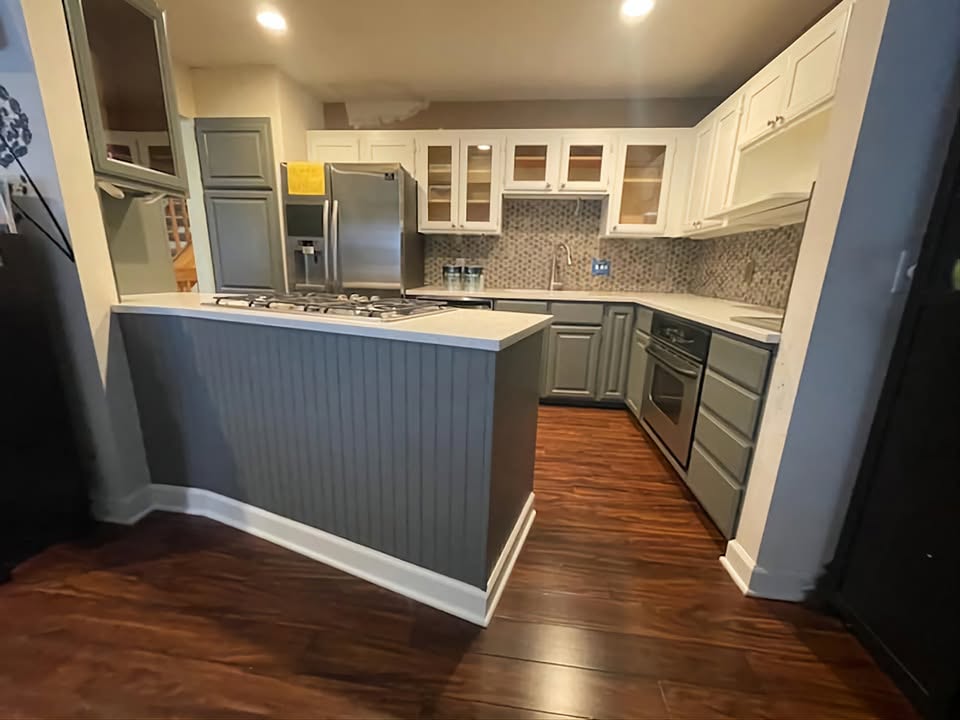
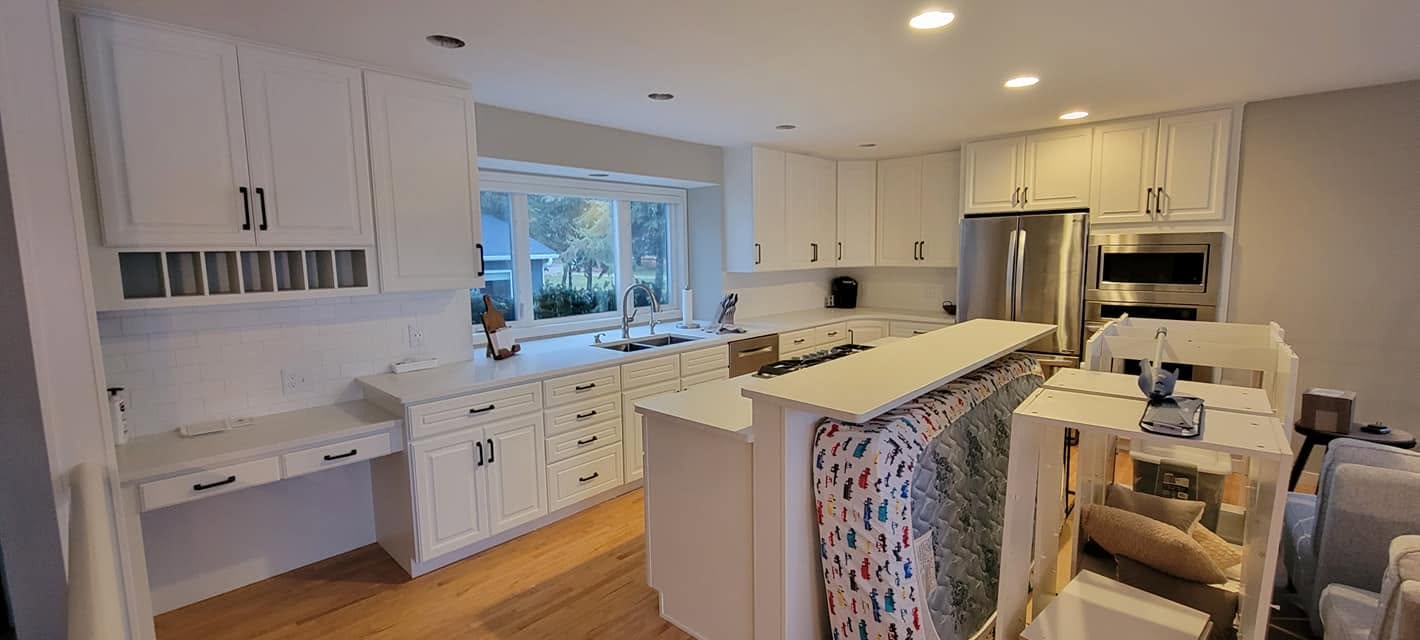
Cabinet painting is one of the highest-impact upgrades you can make to a kitchen, and one of the most commonly done wrong. Done right, it means a smooth, factory-quality finish on every door and drawer front, a hard enamel that holds up to daily use, and a result that looks like you spent three times what you actually did. Done wrong, it chips within months and leaves you wishing you’d replaced them instead.
At Prodigy Painting, we’ve spent over 15 years getting this process right. We’re an EPA Lead Certified Contractor, and we don’t cut the steps that make cabinet finishes last: the degreasing, the bonding primer, the spray application, the full cure time. Every detail is covered so the end result actually holds up to the way you live in your kitchen.
Our Process
How We Paint Cabinets at Prodigy Painting
-
Step One
Walkthrough and Estimate
We start by walking through the kitchen with you, looking at the cabinet material, current finish, condition of the doors and boxes, and what color and sheen you're after. You get a written estimate with every step, every product, and every coat listed out before any work begins. -
Step Two
Removal and Labeling
Every door and drawer front comes off and gets labeled so it goes back exactly where it came from. Hardware is removed and bagged. The kitchen is masked and sealed so finish work doesn't travel where it isn't supposed to. -
Step Three
Degreasing, Sanding, and Priming
We degrease every surface thoroughly, then scuff-sand or chemically deglaze so the primer has something real to bond to. A bonding primer goes on next, with a stain-blocking formula on oak and other tannin-rich woods to stop any bleed-through from affecting the finish. -
Step Four
Spray Application and Two Finish Coats
Doors are spray-finished in a controlled area with two coats of cabinet-grade enamel. Spray application is what gives you the smooth, factory-quality result that brushing can't replicate. The boxes get the same treatment, cut in and finished with the same product. -
Step Five
Rehang, Adjust, and Final Walkthrough
Once everything is fully dry (the full process runs a minimum of 3 to 5 days), every door and drawer front goes back up, hardware is reinstalled, and we adjust until everything closes cleanly. We walk the finished kitchen with you before we consider the job done, and we leave you touch-up paint labeled by location.
Why Prodigy Painting
Preparation Is Where Premium Results Actually Start
Most paint failures, peeling, bubbling, uneven sheen, trace back to one thing: prep that got rushed or skipped entirely. That's the part homeowners usually can't see, which is exactly why it's where corners get cut. At Prodigy Painting, prep is non-negotiable. Every surface is cleaned, sanded, primed, and ready before any finish coat goes on. We specify premium products by name in your estimate so there's no guessing about what's going on your walls, and our labor warranty backs the finished result, not just the paint manufacturer's promise. Over 15 years of work across the Twin Cities, and our reputation is built on projects that still look great years later.
See How We WorkHow much does cabinet painting cost in the Twin Cities?
Most Twin Cities kitchen cabinet painting projects fall somewhere between $3,000 and $8,000, with per-door pricing commonly landing around $100 to $200 per door or drawer front including the frames. What moves the number is how many doors and drawers you have, whether there’s an island or built-ins, how much prep the current surface needs (oak grain filling adds labor, for example), and the product tier. Cabinet interiors, new hardware, and any wood repairs are usually separate line items. We’ll give you a written estimate with everything spelled out before anything starts.
How long does the cabinet painting process take?
Most kitchens take a minimum of 3 to 5 days on-site. When doors are finished off-site in a spray environment, the full job can span one to two weeks from start to final rehang. Your kitchen stays partly usable during the work, though counters and boxes will be masked while we’re finishing. The enamel is hard enough to handle in a few days, but it takes about two to four weeks to fully cure. We’ll tell you exactly what to avoid (harsh cleaners, slamming doors) until you hit that mark.
Can oak cabinets be painted without the grain showing through?
Yes, but it takes extra steps. Oak has an open grain that texture shows through paint as subtle ridges if you don’t fill it first. For a completely smooth, grain-free finish, we use a grain filler or several coats of high-build primer sanded between applications. That adds labor and is worth building into the quote from the start. Some homeowners actually like the visible grain texture and choose to keep it. We’ll talk through both options so you know exactly what you’re getting before we start.
Should I paint, reface, or replace my cabinets?
Painting is the right call when your boxes are structurally sound (solid wood or MDF, no water damage, no swollen particleboard) and the layout works for how you use the kitchen. Refacing makes sense when you want a completely different door style, like going from raised panel to flat Shaker, without touching the existing boxes. Replacement is really only necessary when the boxes themselves are damaged beyond repair or you’re changing the layout or appliances. Painting is almost always the lowest-cost, fastest, and least disruptive path when the bones are good.
Does Prodigy Painting handle lead paint on older cabinets?
Yes. We’re an EPA Lead Certified Contractor, which means we’re qualified and trained to handle pre-1978 homes where original cabinets or trim may contain lead paint. Any paid work disturbing more than 6 square feet of painted surface per room in an older home requires an EPA RRP-certified firm following lead-safe practices: containing the work area, using approved methods, and cleaning up and verifying afterward. We take that compliance seriously and handle it correctly every time.
Let's Get to Work
Your Space Deserves Better Than Average. Let's Make It Happen.
Request a Free EstimateWhere We Work
Serving the Twin Cities and the Surrounding Communities
- Arden Hills
- Champlin
- Shakopee
- Rogers
- Crystal
- Plymouth
- Golden Valley
- Farmington
- Inver Grove Heights
- St. Louis Park
- Circle Pines
- Wayzata
- Robbinsdale
- Medina
- Prior Lake
- Apple Valley